Issue:
92
Page: 42-57
A Brief History of Adulteration of Herbs, Spices, and Botanical Drugs
by Steven Foster
HerbalGram.
2011; American Botanical Council
Introduction
In
an April 1896 lecture on drugs and food adulteration delivered to the
state medical society in Los Angeles, California, San Francisco
physician G. F. Hanson suggested that adulteration and sophistication
began with the earliest human interactions.
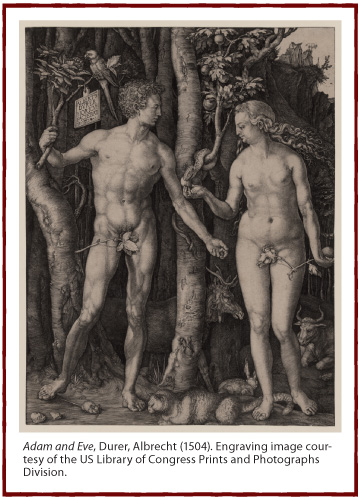
“Since the memorable occasion upon which young Eve palmed off the green apple on old man Adam, more or less fraud in food handling has occurred, as opportunity offered and occasion for profit suggested. In the adulteration of drugs even more elasticity of conscience has been necessary to permit the almost unlimited sophistication which has been practice from time immemorial.”1
Since the beginnings of civilization, once commerce develops, adulteration follows. Adulteration, falsification, substitution, and sophistication of willful intent or wanton neglect have evolved, along with the trade of one item of value for another item of equal or greater value. In the context of drugs, loosely defined as substances intended to benefit health or cure disease, adulteration results in accidental, negligent, or intentional variations in identity, strength, purity, and expected outcomes from a named or at least implied identity of a drug, even if the standard of identity was merely an organoleptic (sensory observation) expectation. In modern times (the past 500 years), adulteration by intent or neglect of defined professional standards is perhaps even more nefarious. As scientific method or professional expertise usually offers at least the potential of authentication, falsification generally involves knowingly offering or labeling a substance as something that it is not.2
Substitution may involve offering one substance in place of another more expensive ingredient, or substituting one substance for another that might not be readily available or available only at a much higher price. If knowingly offered by both seller and buyer as a “substitute” for another substance, then the practice may be socially (and economically) acceptable, depending upon the cultural context. As Traditional Chinese Medicine became part of China’s national public healthcare system in the mid-1950s, local species of important herbal drugs were reasonably substituted for the official source plant with the knowledge that the substitute was less potent. For example, in the 1985 Pharmacopoeia of the People’s Republic of China, with respect to the official source plant for the herb jin yin hua is Lonicera japonica (Caprifoliaceae, Japanese honeysuckle flowers). Three species, L. hypoglauca, L. confusa, and L. dasystyla, are listed as interchangeable substitutes for L. japonica. An additional 9 species are acknowledged to be acceptable as local substitutes in specific regions. In this example, when the “official” species is unavailable, local substitutes are acceptable.3
Sophistication or the use of sophisticants to change the expected nature of a substance or product may involve premeditated and in some cases elaborate methods to introduce adulteration and falsification to a substance or product. An example is the elaborate attempt to make fluidextract of ginger more palatable as a way to attain a cheap drunk during the prohibition of alcohol in the United States during the 1920s by systematically adding plasticizers such as dibutyl phthalate and ethylene glycol (antifreeze) to the illegal beverage disguised as a medicinal “fluidextract.” Finally, tri-ortho-cresyl phosphate was added to the extract to smooth out the taste—an infamous example of sophistication that led to thousands of tragic toxic reactions, the story of “ginger jake.”
For the purposes of this article, permit this author to simplify the definition of the broad concepts of causes and manifestations of adulteration common terms: An adulterated product is one in which the customer does not receive what he or she is led to believe to be purchasing.
Adulterants, Sophisticants, and Falsification of Botanical Medicines in History: Rise of the Promise of Science
Ancient sophistications and adulteration are described, though not systematically, by the famous Greco-Roman medical and natural history writers, including Dioscorides, Pliny the Elder, Theophrastus, and Galen, often in the context of organoleptic variations in taste and smell or physical differences such as color.2
In his Materia Medica, the first century Greek physician in service to Rome, Pedanius Dioscorides (40-90 CE), observed methods of detecting sophisticants for balsam, identified as Balsamodendron opobalsamum, perhaps a synonym of Commiphora opobalsamum (Burseraceae). The taxonomy of this plant is currently unresolved; it is referred to as a synonym of C. gileadensis in the American Herbal Product Association’s Herbs of Commerce 2nd edition, under the common name balm-of-Gilead (oleo-gum-resin), with the synonyms Mecca balsam, Mecca myrrh, and opobalsamum.4
Dioscorides said of Balsamon:
“But it is adulterated in a variety of ways. For some mix it with ointments, as for instance terebinth (Pistacia terebinthus, Anacardiaceae), flower of henna (Lawsonia inermis, Lythraceae), mastic oil (Pistacia lentiscus, Anacardiaceae), lily oil (Liliaceae), oil of ben tree nut (Moringa peregrina, Moringaceae) metopion he, honey, cerate of myrtle (Myrtus communis, Myrtaceae), or very thin unguent of henna flowers. Thus this kind can easily be detected. For when dropped onto a wollen cloth and thoroughly washed out, that which is pure leaves neither stain nor spot, but the adulterated juice does not do. The milk, when poured on milk or water, dissolving immediately, becomes milky, but the adulterated floats like oil, whirling and spreading out in a star-like manner. Yet, as time goes by even the pure one deteriorates, thickening by itself.”5
Dioscorides noted that frankincense (Boswellia sacra, Burseraceae) was easily flammable, and the smoke was clear with a pleasant fragrance.
Stieb’s analysis of Dioscorides’ Materia Medica offers 40 adulteration examples, 30 of which include methods of detection. Most included organoleptic and other physical or qualitative distinctions, in addition to suggesting that geographic origin or an often-ambiguous botanical description might serve to distinguish the presence of adulterants or suggest purity. Physical determination included the flame test (flammability or lack thereof), displacement, weight, organoleptic tests, and solubility, among the most often used methods.2,6
Even today a simple flame test is useful for any traveler to Peru. When a merchant attempts to sell a garment or textile claimed to be made of “baby alpaca wool,” one need only pull a lighter or match from one’s pocket and ignite a small thread to test for the common spurious substitute—polyester. If the thread burns cleanly without a hint of melting, it has a chance of being the genuine article. If the thread shrivels and melts like plastic, one is likely being offered alpaca-like soft polyester. Societal response to adulteration throughout history seeks to prevent wool from being pulled over one’s eyes.
Pliny the Elder (23–79 CE)—the Roman naturalist, author, and philosopher—wrote the encyclopedic work Naturalis Historia, which remains one of the most important accounts of natural history in first century Rome. Pliny wrote of various means of authenticating not only herbs and spices, but also other natural substances such as silver. Placing a piece of silver on a shovel and thrusting it into a kiln at white heat could ascertain the best quality of silver. The best quality, he asserted, would remain perfectly white. If the silver turned a reddish color, it was an inferior grade. If it turned black, it was worthless. But fraud has found its way even into this test; if the shovels are kept in human urine, the silver shaving is stained by it during the process of being burnt and counterfeits whiteness. There is also one way of testing polished silver with a person’s breath—if it at once forms surface moisture and dissipates the vapor.7 Speaking generally about adulterations, Pliny lamented: “…the same fraudulence which is so extremely ingenious in every department of life has devised an inferior material.”8
In ancient Athens, a special inspector was charged with detecting and halting wine adulteration. One wine purveyor enjoyed the reputation of excelling at adding ingenious sophisticants, imparting the flavors of both age and maturity to new wine. Galen of Pergamum (129-201 CE), physician to Roman Emperor Marcus Aurelius, suspicious of purveyors of drugs, characterized such merchants as “roguish dealers of petty wares.”2
Archimedes, born a year after Theophrastus’s death in 288 BCE, is often held as the first to apply scientific methods to the detection of adulteration by using concepts akin to modern scientific methodology. He famously applied a measurable physical constant—the displacement of the volume of water by an object placed in water— to show that something other than gold was the base metal in the crown of King Hiero (of Syracuse, in modern-day Sicily). Therefore, he used what is known today as specific gravity to measure metal purity. Subjective empirical opinion based on the knowledge and experience of a trader, buyer, or observer of nature was displaced by emerging science.2
Centuries of Low Expectation: Medieval Centuries
Arabs of medieval Islam, assimilating the works of Greek and Roman authors into a more sophisticated pharmacy, relied on control systems of religious oversight. Inspections and the presence of an amin overseeing the preparation of compound medicines helped to thwart adulteration. An oath was required that no change to the mixture would occur after the amin left the premises. The use of false weights and measures or adulteration was controlled with a fear of God, the threat of severe punishment, and impromptu weekly inspections. Adulteration was recognized. Controls were implemented.2
From ancient times to the 17th century, the collective evolution of experience and empirical knowledge further refined organoleptic nuance and specificity. The literature from the 12th century forward is rich with specific examples of attempts to adulterate virtually any spice or drug of value in order to serve a demand outstripped by supply and tempted by the opportunity for wealth. Municipalities, medical professionals, societies, organized religions, regional authorities, national governments, and kings imposed responses with consequences for those who strove to prey on the void of verification.
History is replete with accounts of adulteration recognized in myriad substances—from bread and flour to alcoholic beverages, foods of all manner, and even attempts to add alloys of little value to precious metal. It is in this author’s lifetime that American coinage has moved from the value of the precious metals the coins contain to alloys of no intrinsic value beyond the denomination assigned to them. From ancient times to today, society has punished the counterfeiters of the “coin of the realm” with stiff fines and sentences. Societies throughout history have targeted and punished the baker, butcher, vintner, product manufacturer, and druggist who adulterate the merchandise they sell and hence adulterate the very construct of public trust as a social concept.
By the mid-11th century, Europe began to experience a revival of the arts. In 1070, construction began on the London Bridge and Westminster Abbey. In 1095, the first Crusade intermingled Christian militants with established schools of higher learning in Salerno, Seville, Toledo, and Cordova. Guilds of students formed to establish places of study and mutual protection of collective interests. These associations led to the creation of universities (universitas means association), such as Paris in 1110, Bologna in 1113, Oxford in 1167, Cambridge in 1209, Padua in 1222, and Naples in 1224. Pharmacy was part of the course of medicine. By the 12th century, guilds were formalized in England to protect the collective interests of spice traders.9
In 1100, the Ancient Guild of Pepperers was organized in London, and, in 1345, was formalized as a fraternity receiving permission from Edward III to incorporate, though the Guild did not receive a formal charter until 1428. In 1373, the fraternity was called the Company of Grossers. Three years later, it changed its name to the Company of Grocers of London. The Company’s name is derived from the Latin, grossarius, meaning one who buys and sells in gross (en gros), or wholesale merchants. In 1453, the Grocers’ Company was entrusted with the King’s Beam, officially weighing all goods sold by the Aver-de-Poys weight or the peso grosso. It was also charged with the duty of garbling, or preventing the adulteration of spices and drugs. Garbling is sifting, sorting, cleaning, separating, and culling to remove physically unwanted soil, dirt, etc., or separate particles by size and/or quality.
Late in the 15th century, the Grocers’ Company consolidated its power and was given the exclusive right to garble drugs and spices and examine the drugs and prescriptions sold by apothecaries. They exercised their authority over apothecaries by imposing fines for any adulterated or misrepresented preparations.10
As the 15th century progressed, the application of movable type and oil-based ink by the German Johannes Gänsfleisch, better known as Gutenberg, revolutionized the availability of information with the printed book, starting with the relatively low-priced and high-quality Bible, published in 1455. In a few short years the Elzevir Press was established in Holland, followed by the Caxton Press in England. Second to the production of religious works was the production of herbals, initiating the great age of early modern herbals and works on materia medica in the period from 1500 to 1800. Details on the source plant in herbal traditions and their use moved from the experienced master and the apprentice to the literate citizen. The 16th and 17th centuries saw a proliferation not only of herbals, but privately printed formularies, commentaries, and compendia. The modern concept of the botanical garden, primarily instituted for studying medicinal plants, proliferated in Padua in 1553, Florence in 1544, and Paris in 1570. The futile attempt of Columbus to discover a route to the Spice Islands led to the discovery of continents new to European experience. Magellan and Sir Francis Drake circumnavigated the globe. Portugal surpassed Venice as a center for the drug and spice trade. Global trade found new meaning and the information age had begun.9
Scientific Method Applied to Drug Adulteration and Verification
The 17th century saw further definition and separation of professional classes such as apothecaries and merchants. In 1617, King James gave the Apothecaries Guild a separate charter and independence from the Grocers’ Guild, restricted only to practitioners of pharmacy. In 1624, when the Grocers’ Guild petitioned the King to reverse the 1617 Apothecaries’ Guild charter, King James responded, “Grocers are but merchants; the business of the apothecary is a mystery; wherefore I think it fitting that they should be a corporation of themselves.”9
By the late 17th century, the mystery of art and craft yielded to the new, emerging force of science. Application of the scientific method of physical science to the detection of adulterants in drugs was heightened by the 1690 work of Sir Robert Boyle (1627-1691) in Medicinia Hydrostatica: or Hydrostatics applied to the Materia Medica. For the first time, Boyle’s scientific method of measuring specific gravity, borrowed with credit from Archimedes’ underlying theories, was used to expose and rectify intentional adulteration of drugs.11
The first national English pharmacopeia in the modern sense—in which the medical and pharmacy professions attempted to agree collectively on a professional standard of the materia medica, if only by agreeing on a list of what to prescribe—is the Pharmacopoeia Londinensis. First issued in a now very rare, typographical error-ridden printing on May 7, 1618, the work was quickly canceled and withdrawn with embarrassment, then replaced with the “official” version printed on December 7, 1618. This ushered in an era of national dispensatories, compendia, and pharmacopeias, backed by legal standing, which, by scientific consensus, defined the “standard” of and “standards” for drugs of the day. Verification of purity and imposed standards of identity would require public outcry and 2 slow centuries of development.12,13
By the late 17th century, the professions of medicine and pharmacy were becoming more distinct in England, with druggists and grocers supplying wholesale quantities to retail pharmacists who compounded physicians’ prescriptions. Efforts to draw distinctions between the professions began much earlier from elsewhere in Europe: the Holy Roman Emperor Frederick II separated the professions of physicians and apothecaries in southern Italy in 1240.
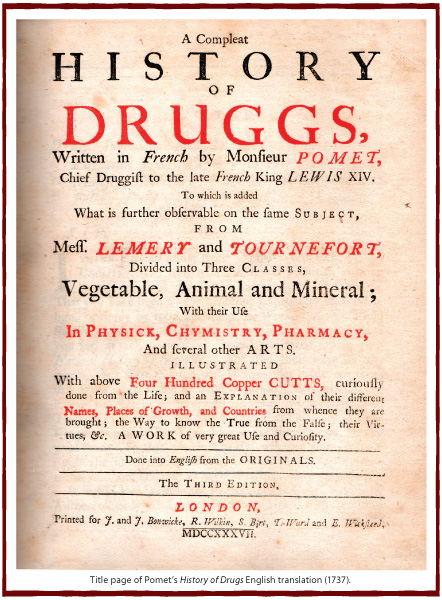
Works such as Pomet’s A Complete History of Druggs, first published in French in 1694, then in a first English edition in 1712, were attempts to expose the growing disdain toward the practice of adulteration. The anonymous author of the 1737 English translation was dedicated to Dr. Hans Sloane14 (1660-1753), physician, collector, and founder of the British Museum as well as the Chelsea Physic Garden in London. Sloane’s patronage was sought, in part, as protection from exposé in the work on adulteration.
“. . . it is not easily apprehended how much the Publick suffers in the Sale, which is daily made of I know not what sophisticated and decay’d Druggs, which are not capable of producing the Effects that are design’d by them, and expected from them, either to restore or preserve the Health of Mankind. We may yet be more surpriz’d at the fatal Mischief that flows from Mens Ignorance in the common Choice of Druggs; and that nothing is more frequent in Druggists and Apothecaries Shops than adulterated Medicines, which deserve not least Tittle of those pompous Names, but which they enhance the Prices of them.”14
Hence the author asks for Sloane’s indulgence, “Therefore as one can scarce discover their Works of Darkness without suffering by the Malignity of their Tongues, who so undeservedly make a Gain of Peoples Credulity, I stand in Need not only of an Advocate but a Protector.”14
Pomet’s Druggs describes the quality of many drugs and suspected adulterants. In the book’s first entry on wormseed (Chenopodium ambrosioides, Chenopodiaceae), the authors suggest that one choose seeds that are plump, of a greenish cast, with the typical distinctive flavor, and clean with nothing sticking to the seed. It should not be too green, and the reader is warned that the seed of southernwood (Artemisia abrotanum, Asteraceae) not be imposed upon the buyer. The seeds of the latter are larger, longer, and of a darker green color.14 Obviously, such subtle distinctions require that the buyer be knowledgeable and trusting of the purveyor.
In the case of cinnamon (Cinnamomum verum, Lauraceae), Pomet warns that oil of cinnamon may be mixed with spirit of wine, and with salt of tarter added “so that those who buy an Ounce of this Oil, have not above half an Ounce for their Money. Tho’ the Cheat is easy to discover two Ways: The first is, when looking into the Bottle in which it is contain’d, you may observe the Humidity that is with in. The second is, by dipping the Point of your Knife in, and putting it into the Candle; if there is any Mixture of the Spirit of Wine, it will take fire presently; but, on the contrary to that, when it is pure, it will do nothing by smoke.”14
Of saffron (Crocus sativus, Iridaceae), Pomet’s book notes, “...there is a great deal of Saffron-Powder sold, so it is generally a Cheat upon honest People, that being almost only sold in Powder, which has been us’d before hand by the Druggist, or Apothecary, to Make Tinctures, Spirits, or the like, with.”14 It was then redried and sold as powdered saffron.
Public Outcry—Accum’s Exposé
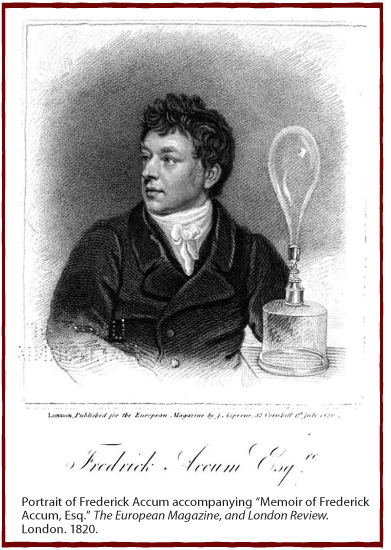
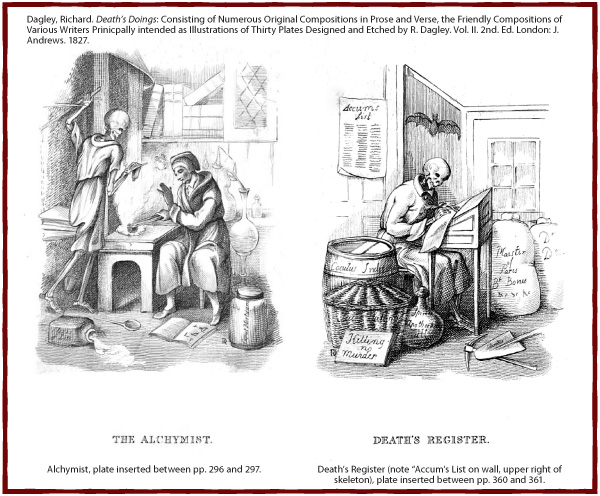
Professional organizations that evolved from guilds began to form and self-police the shops in London, but the nefarious practices continued and gained even greater levels of sophistication. The popular acceptance of the science of chemistry and its rise as the scientific foundation of a liberal education in the second half of the 18th century set the stage for a popular uprising against adulterators. The modern era—still evolving today—in which scientific theory, analytical methods, and reproducible techniques permit accurate measures of purity, identity, and detection of sophisticants—starts with the landmark 1820 work of Frederick Accum: A Treatise on Adulterations of Food, and Culinary Poisons. Bakers, brewers, vintners, and “pepperers” were among the most suspect of tradesmen he exposed. The title page of Accum’s work famously declared, “There is death in the pot.”15 Accum himself was sometimes referred to as “old death in the pot.”
Accum described himself as an operative chemist and lecturer on practical chemistry, mineralogy, and on chemistry applied to the arts and manufacturers. By the time Accum’s Treatise was published, chemistry had become the central science and an “indispensable” subject in a liberal education. Accum was celebrated in social circles of England among the most active of laborers in the field of chemistry, particularly in practical applied chemistry in daily life. Born in Germany, he came to England in 1793, and by 1800 had established a laboratory at Compton Street in Soho, where he sold chemical preparations, and established himself as a public and private lecturer in chemistry, operating out of his own home. In 1809, he was appointed Professor of Chemistry at Surrey. By 1820, he had published 9 treatises on various subjects relative to chemistry and the philosophy of chemistry. One work published in 1891—Chemical Amusement: Comprising a Series of Curious and Instructive Experiments in Chemistry, which are easily performed, and unattended by Danger—might be regarded as the first primer on chemical entertainment and education, paving the way for the popular chemistry set of the 20th century. Accum became a frequent witness in courts and in Committees of Parliament, explaining processes and facts pertinent to chemical science. His popularity as a lay and academic lecturer, plus contributions to scientific and popular periodicals, set the stage for publication of his Treatise on Adulterations in 1820, and the development of public awareness and reaction that was to lead to the implementation of a series of laws, regulations, and acts that are the foundation of modern food and drug laws.16
Accum was obviously an industry insider. He knew what really happened in the marketplace. Spurious black pepper (Piper nigrum, Piperaceae) was manufactured with a mixture of spent linseed (Linum usitatissimum, Linaceae) cakes, powdered clay, and a little cayenne (Capsicum annuum, Solanaceae), pressed through a sieve then rolled inside a cask to produced granules of appropriate size. Once he exposed the adulteration, he offered methods for detection:
“That factitious pepper-corns have of late been detected mixed with genuine pepper is a fact sufficiently known. Such an adulteration may prove, in many instances of household economy, exceedingly vexatious and prejudicial to those who ignorantly make use of the spurious article… The mode of detecting the fraud is easy. It is only necessary to throw a sample of the suspected pepper into a bowl of water; the artificial pepper-corns fall to powder, whilst the true pepper remains whole.”15
Accum exposed the smoking gun that implicated traders. Ground pepper dealers sophisticated the product with genuine pepper mixed with pepper warehouse sweepings. In the wholesale markets, ground pepper “P.D.” signified pepper dust, and “D.P.D.” represented dust (dirt) of pepper dust. Accum used scientific evidence that was supplemented by the traders’ own designations to expose spurious commodities. Great Britain’s “Pepper Act” of July 5, 1819, imposed a fine of 100 pounds on those in possession with intent to deliver the adulterated pepper.15
Respectable chemist shops, Accum revealed, used a liberal amount of white porcelain clay (pipe clay) from Cornwall as a substitute for sugar in formulating lozenges of substances not soluble in water, such as ginger, cream of tartar, or magnesia. He quoted Dr. T. Lloyd, who, upon suspecting the fraud, went to a prominent chemist’s shop to demand an explanation. The chemist informed him that 2 kinds of ginger lozenges were kept for sale. One was priced at 3 pence per ounce, the other at 6 pence per ounce. The higher-priced lozenges that contained pure sugar were sold to regular customers. The half-priced version, cut with pipe clay, was manufactured for those customers that were fond of haggling over the price and content to “enjoy the delight of getting it cheap.”15
He reported on other food preparation practices that would lead to unintentional, though predictable poisoning. Innkeepers in the north of England prepared mint salad by bruising and grinding the leaves in a large wooden bowl. However, to bruise and process the leaves more efficiently a ball of lead weighing 12-14 pounds was rolled in the bowl, “and portions of the lead are ground off at every revolution of the ponderous instrument.”15
Imported commodities such as coffee (Coffea spp., Rubiaceae) or tea (Camellia sinensis, Theaceae) were often subjected to cutting with other substances or outright substitution with other ingredients. Accum reported on several cases of tea adulteration for which convictions were delivered in the courts, as reported in London newspapers including the Times and the Courier from March through July of 1818. Edmund Rhodes was charged with dying, fabricating, and manufacturing large quantities of tea made from a mix of sloe leaves (Prunus spinosa, Rosaceae), ash leaves (Fraxinus excelsior, Oleaceae), elder leaves (Sambucus nigra, Adoxaceae) and leaves of a certain other tree. The accused was convicted and fined 500 pounds. The falsified tea was made by mixing together the green leaves of the various plants, boiling them, baking them on an iron plate until dry, and then rubbing them by hand to mimic the curled, rolled leaf of the genuine article. Black tea was colored with logwood and spurious green tea was colored with carbonate of copper. Accum gives detailed methods for detecting the presence of logwood in black tea and copper additives to falsified green tea. Accum also notes that “Mr. Twining, an eminent tea-merchant, asserts, that ‘the leaves of spurious tea are boiled in a copper, with copperas [also known as ferrous sulfate or green vitriol] and sheep’s dung.’”15
Accum’s “Treatise” is the Silent Spring of food adulteration. Its publication marked a societal watershed moment where public outrage spurned a slow struggle toward legislative control. A popular anti-adulteration movement emerged from the widespread indignation.
A Response by the Professional Medical Community
Popular discontent inevitably led to professional action. In England, leading professionals in the newly emerging academic field of pharmacy were convinced that the problem had to be self-policed from within the profession. The Pharmaceutical Society was formed in 1841, conceived in the spring of that year in the home of Jacob Bell (1810-1859) in Oxford.17 Bell was a pharmacist (he described himself as a “pharmaceutical chemist,” chemist being the term now synonymous with pharmacist in the United Kingdom) who worked to reform the profession with Jonathan Pereira (1810-1853), an early pioneer of pharmacology and author of the 2-volume The Elements of Material Medica and other works, along with Daniel Bell Hanbury (1825-1875), botanist, pharmacist, and co-author (with F.A. Flückiger) of the 1879 classic Pharmacographia.18 They conceived of the idea of the Pharmaceutical Society. Hanbury, a health advocate, also famously championed opposition to the consumption of alcohol and tobacco, and was a vegetarian. At the time of this meeting Hanbury was still a teenager, yet about to enter pharmacy school, and at age 16, had just begun work in his father’s pharmacy. On April 15, 1841, at a public meeting at the Crown & Anchor in Bloomsbury, the Pharmaceutical Society was formerly chartered, with the express purpose of educating retail chemists and druggists on the incidence and techniques of adulteration, and how to avoid purchase of adulterated products from wholesalers. The Society also sought to establish professional standards for pharmacists and established the Pharmaceutical Journal, which in its early years published many papers on the subject of adulteration.19
Legislative Reaction in the UK
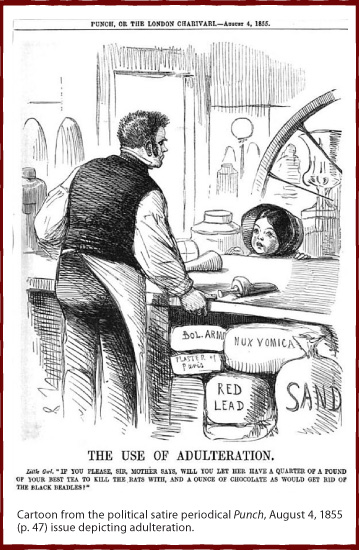
In 1855, Britain’s Parliamentary Select Committee—appointed to investigate adulteration of food, drinks, and drugs—issued its report with landmark testimony.20 Armed with microscopy, chemistry, and physics, Arthur Hill Hassall, MD, testified that annatto (Bixa orellana, Bixaceae) seed was adulterated with chalk, red lead, turmeric (Curcuma longa, Zingiberaceae), salt, soap, and rye (Secale cereale, Poaceae) flour. Cayenne pepper might contain ground rice, mustard husk, sawdust, and salt, skillfully colored with red lead or bisulphate of mercury. The list of substances tested with an obvious result of pervasive adulteration shocked the public. Hassall, too, was quick to explain that his list of adulterants was by no means exhaustive, but represented only what could be reproducibly detected by microscope and chemistry. The expert testimony of Hassall and others at the hearings lit the fire of developing laws and regulations leading to modern controls. Hassall championed the use of the microscope in detecting adulterants, ushering in a new discipline of expertise in the use of microscopy in authenticating food and drugs and exposing adulterants they may contain.21
Hassall (1817-1894) began his medical studies in 1834 as an apprentice to his uncle, Sir James Murray. His interest in microscopy and botany, particularly freshwater algae, led to publication of a landmark study in 1850, “A Microscopic Examination of the Water Supplied to the Inhabitants of London and the Suburban Districts.” The work became influential in the development of reforms in management of public water supplies. His many papers on food and drug adulteration followed, leading directly to England’s 1860 Food Adulteration Act. During his lifetime he was regarded as “the father of public analysis” and the “Apostle of Anti-Adulteration.”
In A Memoir of Arthur Hill Hassall, author Edwy Godwin Clayton described Hassall’s most conspicuous public service as, “the application of the microscope, for the first time on an important scale, in the analysis of food and drugs, and in the determination of the exact nature of the living organisms found in water supplied for the public use.”22
In the mid-19th century, widespread adulteration of foods attracted the most attention of regulators and enforcement officials, partly because food adulteration was so pervasive. Detecting drug adulteration proved to be more nuanced, requiring regulations that not only detected spurious additions to a product, but that also sought to maintain standards of quality and potency toward a predictable therapeutic action at a specific dose.23
The Rise of the Anti-Adulteration Movement in the United States
The anti-adulteration movement grew in the United States at the same time as those in the rest of the world. In 1838, William Hodgson Jr. began a regular series in the American Journal of Pharmacy, “Notes on Falsifications and Adulterations.” “It cannot be denied that this evil is rapidly increasing, and perhaps as much so in the department of Pharmacy as in any other,” he wrote. “In this state of things the question naturally occurs, whether it be not the duty of the honest pharmaceutists and physician to do all that single or combined efforts can accomplish to protect the community from its effect.”24
Professor of chemistry and natural history at Rutgers University, physician and botanist Lewis Caleb Beck publicized the issue in an 1846 work Adulterations of Various Substances Used in Medicine and the Arts, with the Means of Detecting Them.25 Beck’s scientific authority and ability to communicate scientific concepts in plain language—while also providing simple, practical techniques to identify sophisticants—rallied public and professional attention to the subject. Two years later, in the spring of 1848, time coalesced around the need for federal legislation in response to the growing awareness and disdain toward adulterated drugs, in particular, imported drugs. The Colleges of Pharmacy of Philadelphia and New York, the state of Mississippi, the fledgling American Medical Association, and M.J. Bailey, MD—the drug examiner of the New York customhouse—came together to petition Congress to take action. On June 26, 1848, Congress passed the first statute meant to block the importation of deteriorated or adulterated drugs, titled, “An Act to prevent the importation of adulterated and spurious drugs and medicine.”26 In practice, the requirement in the law that imported medicinal raw materials conform to the pharmacopeias and dispensatories of the United States, Edinburgh, London, France, or Germany was difficult to enforce because the required works did not have a uniform single standard and existing customs officials had little knowledge of pharmacopeial standards and methods.17 In many cases, too, there was no method to detect the adulterant.
In order to further enforcement, Dr. Bailey, Special Examiner of the class of Merchandise in the United States Custom at the Port of New York, produced a report relative to the practical application of the law. The law took effect on July 12, 1848. Before one year had passed, by June 1849, Bailey had rejected importation of about 90,000 lbs of adulterated plant drugs and other medicines, “which met from its inception, the open, determined and unremitting hostility of a God-forsaken portion of our trading community.”27 Among the items rejected were 13,120 lbs of “Spurious Yellow Bark” in October 1848; 12,800 lbs of Spurious Yellow Cinchona Bark (Cinchona spp., Rubiaceae) in December 1848; and various shipments of rhubarb root (Rheum spp., Polygonaceae), opium (Papaver somniferum, Papaveraceae), myrrh (Commiphora myrrha, Burseraceae), senna (Senna alexandrina, Fabaceae) leaf and/or fruit, and other drugs. Professional organizations had been successful in a public response to adulteration in the form of legislation, and had put the merchant class on notice that spurious adulteration would no longer be tolerated, setting the stage for legislation and regulations to follow until today.
In a May 24, 1895, lecture, Willis G. Tucker—director of the New York State Board of Health Laboratory—outlined some of the differences between the adulteration of foods and drugs. Intentionally adding inferior ingredients to make weight in foods—such as adding sugar to maple syrup, roasted cereals to ground coffee, or “all sorts of rubbish to ground spices”28—is not the type of debasement commonly met with drugs. He suggested that the adulteration of drugs can be more subtle than the adulteration of foods and does not necessarily involve the willful and direct addition or substitution with foreign substances, but instead offering articles of inferior quality or of inferior potency, or, in some cases, excessive strength. Citing the law of the State of New York at the time (Public Health Law, Chapter 661, 1893), Tucker outlined the conditions for which legal adulteration was defined:
1. If when sold under or by a name recognized in the United States Pharmacopeia, it differs from the standard of strength, quality, or purity laid down therein.
2. If when sold under or by a name not recognized by the United States Pharmacopeia, but which is found in some other pharmacopeia or standard work on materia medica, it differs materially from the standard of strength, quality, or purity laid down in such work.
3. If its strength or purity fall below the professed standard under which it is sold.29
An angry public with science on its side prompted legislative action in Great Britain and culminated in the United States with passage of the Food and Drug Act of 1906. The term sophisticants has long been associated with adulteration. Indeed, some adulterators have gone to great lengths to disguise their misdeeds, as in the case of sophistication of tea, described by Accum in 1820. In the annals of adulteration, particularly in the United States, no case of sophistication acquired more infamy than the “ginger jake” incident of the 1930s.
Ginger Jake Epidemic
The most famous incidence of adulteration leading to life-changing, crippling effects of epidemic proportion grew out of society’s circumvention of the 1919 Volstead Act that created prohibition. High-proof liquor was banned. Honesty in labeling imposed by the Pure Food and Drugs Act of 1906 required patent medicines to list their ingredients such as opium, morphine, heroin (all derived from P. somniferum), cocaine (derived from Erythroxylum coca, Erythroxylaceae), or cannabis (Cannabis sativa, Cannabaceae), along with the alcohol that inevitably represented the bulk of the volume and weight of many a patent medicine swill.
Medicines listed in the United States Pharmacopeia (USP) or that claimed to be a certain type of medicine—such as a fluidextract or elixir, including those offered as patent medicines—were required to meet USP standards. For example, to be labeled a fluidextract, the product had to contain 4% solids. In the case of a fluidextract of ginger (Zingiber officinale, Zingiberaceae) root in the form of “Essence of Jamaica Ginger,” ginger jake delivered 70% alcohol in the form of a patent medicine. In an effort to enforce prohibition, government agents would seize products from store shelves or manufacturers and test it for the percentage of solids. If it failed the test, the manufacturer was forced to improve the percentage of ginger solids. The taste of the USP ginger extract was not inviting. In order to make it more palatable, some manufacturers adulterated the extract with molasses, glycerin, or castor oil to mask the taste. Random sampling of suspected adulterated lots by the Treasury Department’s Bureau of Industrial Alcohol led to the confiscation of adulterated product, which in turn inspired more creativity by those manufacturing ginger jake for a cheap, illegal drunk.29
Two shady brother-in-law businessmen from Boston, Harry Gross and Max Reisman, worked diligently to circumvent the government chemists. In 1921, Gross obtained a Prohibition Bureau permit to handle alcohol for various manufacturing purposes, but it was revoked within 2 years. Reisman shipped 5 gallons of pear (Pyrus communis, Rosaceae) extract to an Indian reservation and was indicted for violating federal law prohibiting the sale of alcohol on reservations. The Prohibition Bureau was convinced the pair was bootleggers and found a still at their country house in 1927, though no arrest was made. By 1928, they became wholesale manufacturers of ginger extract, which was shipped around the country in barrels labeled “liquid medicine in bulk.” In 1929, they sought an adulterant less expensive than castor oil and more difficult to detect. They tried the plasticizer dibutyl phthalate, fusel oil, butyl carbitol, and ethylene glycol (antifreeze), but none quite fit the bill for them. Finally they settled on another plasticizer, an industrial chemical used to finish lacquers, leather treatments, and airplane finishes—tri-ortho-cresyl phosphate (TOCP).30
By February of 1930, Oklahoma physicians, including Ephraim Goldfain of Oklahoma City, began seeing patients with neurological problems. By the end of the day on February 27, 1930, Goldfain had seen 4 patients with the same condition. One of the patients informed the physician that 65 people in the same area of Oklahoma City were afflicted with the same symptoms. City health supervisor E. Miles joined Goldfain in interviewing more than 30 people, and discovered that they had all ingested Jamaica ginger extract in the previous 2 weeks. They unsuccessfully attempted to discover a toxic compound in the ginger extract. Other physicians from New York to California began to see similar cases. Early in 1930, the Treasury Department’s Bureau of Industrial Alcohol discovered the presence of TOCP in offending samples of ginger extract. Despite the fact that by mid-March of 1930 the emerging epidemic was reported in newspapers around the country, it was already too late for tens of thousands of imbibers of ginger jake. Many of the victims were single, poor African Americans or downtrodden, poverty-stricken veterans of World War I.
Symptoms of TOCP poisoning, following initial gastrointestinal problems, had a latency period of 10-20 days. The proceeding neurotoxicity included pain and paresthesia of the lower extremities, then progressive muscle weakness usually developing into paralysis of the lower extremities. The paralysis often left rubbery function of the lower limbs, creating a dragging gait or shuffle, requiring one foot to be physically moved in front of the other with the hands. The symptoms were the result of axonal degeneration in peripheral nerves and degeneration of anterior horn cells from the spinal cord. No legal remedy was available for the victims despite the best efforts of the United Victims of Ginger Paralysis, formed in May of 1931 in Oklahoma. Product liability law barely existed. Federal laws to create class action suits were yet to be conceived. Gross and Reisman were eventually to plead guilty to violations of the Prohibition laws as well as the Pure Food and Drug Act. They convinced the judge that they were only middlemen and bargained their way to probation. Gross’s probation was revoked by a California judge when, in the plea bargain, he failed to mention a shipment of 2 barrels of ginger jake shipped 2 weeks after the stories of the jake-induced toxicity had reached the papers. He served 2 years’ prison time, starting in April of 1932. Brother-in-law Reisman served no jail time.30,31
The ginger jake epidemic spurned a cultural response. Numerous blues artists wrote and recorded jake leg songs. John Morgan, MD, a self-described pharmacoethnomusicologist, compiled a collection of jake leg blues songs issued by Stash Records in 1977. [See: “The Jamaica Ginger-Paralysis Episode of the 1930s” by John Parascandola, HerbalGram 34, pp. 28-35, Summer 1995]. A simple search of “Jake Leg Blues” at an online music store will net many examples.31 Several movies, television episodes, and documentaries also incorporate or cover the story, many of which can be discovered with a simple Google search.
Eleuthero and the Hairy Baby
In the late 1960s and early 1970s, a Chinese herb entered the herb trade, known to botanists as Eleutherococcus senticosus (syn. Acanthopanax senticosus, Araliaceae). Products called “Wuchaseng,” “Wujiaseng,” and “Siberian ginseng” appeared in the market. There was no historical precedence in Chinese traditions for applying the qualifier “seng” to E. senticosus. “Seng” refers to fleshy rootstocks used in Chinese medicine as tonics. “Gin-seng,” for example is one “seng”-producing plant. As E. senticosus has a woody root, it is not a “seng” by traditional Chinese definitions.32 Clearly, marketers attempted to associate this member of the botanical family Araliaceae (ginseng family) with its higher-priced cousins in the genus Panax (such as Asian ginseng [P. ginseng] and American ginseng [P. quinquefolius]). This shrubby member of the ginseng family was widely sold as “Siberian ginseng,” prompting confusion and controversy in the herb trade for more than 30 years, leading one trader to ask if you could call something ginseng if it is harvested with a chainsaw! In the first edition of Herbs of Commerce (1992), the American Herbal Products Association included “eleuthero” as the standard common name for the plant’s products in trade. The debate relative to application of common names in trade of E. senticosus was resolved (in the United States) when the Farm Security and Rural Investment Act of 2002 included a provision that effectively banned the use of the name “ginseng” in product labeling or promotional material in any commercial herb product except those products containing members of the genus Panax. Therefore, with the stroke of President George W. Bush’s pen on May 13, 2002, use of the term “Siberian ginseng” in reference to E. senticosus in US commerce was banned.33
Eleuthero was involved in a case from the early 1990s that provides an example of vicarious substitution involving unintentional product mislabeling, but nevertheless would fit under the definitions of adulteration presented by Willis Tucker above, as the substance in question was defined in a monograph in the English edition of Pharmacopeia of the People’s Republic of China.34 The of case of eleuthero adulteration evolved as the result of a letter to the editor in the December 12, 1990, issue of the Journal of the American Medical Association. A Canadian physician and colleagues reported on a purported case of neonatal androgenization, associated with maternal “ginseng” use in Canada—the so-called “hairy baby” story.35 The isolated case was attributed to the mother’s use of “pure Siberian ginseng.” The authors erroneously confused eleuthero with P. ginseng in the publication. Shortly after the story appeared, longtime HerbalGram Contributing Editor and American Botanical Council Advisory Board member, Dennis Awang, PhD—then head of the now defunct Natural Products Section of Health and Welfare Canada (now Health Canada)—performed an analysis of the plant material in question, and found that the product, though labeled as “Siberian ginseng,” actually contained the root of another herb, Periploca sepium (Asclepiadaceae).36,37 Waller et al., (1992) performed pharmacological tests on rats with the implicated plant material from the case and observed no androgenicity, and concluded that, “the effects observed were specific to humans and possibly related to an undetermined peculiarity of the subject patient.”38
In Chinese tradition, the whole root and lateral roots of E. senticosus are known as Ci-wu-jia. Jia-pi, the bark of E. gracilistylus, is the official source of Wu-jia-pi in the Chinese Pharmacopoeia. The bark of E. senticosus (Jia-pi or Ci-wu-jia-pi) is sometimes used as a substitute. Ci-wu-jia, the root of E. senticosus, is a separate article of materia medica in Chinese tradition. An unrelated plant, Periploca sepium, a vine in the milkweed family (Asclepidaceae), is known in Traditional Chinese Medicine as Wu-jia or Xiang-jia-pi (bark), Gang-liu-pi (bark), and Bei-wu-jia-pi (bark).3,39
Similarities of the Chinese names for E. senticosus and P. sepium apparently led to unintended confusion among American importers and presumably Chinese exporters. Hence Periploca entered the American herb trade as “Siberian ginseng.” Over the last 20 years or so, P. sepium has on several occasions been identified as an adulterant to Siberian ginseng. That confusion extends to the scientific literature.
A case report by a Canadian physician perpetuated that confusion. The physician presented a case report in which a 74-year-old man who had been taking the cardiotonic drug digoxin for many years had abnormally elevated levels of digoxin in his blood. Digoxin levels remained high even after digoxin therapy was discontinued. The physician then discovered that the patient was taking a “Siberian ginseng” product. After stopping use of the product, serum digoxin levels returned to normal. Treatment with digoxin resumed. Several months later, the patient started taking “Siberian ginseng” once again, and serum digoxin levels rose. Use of “Siberian ginseng” was stopped, and serum digoxin levels again returned to normal. The abnormally high levels of digoxin were attributed to “Siberian ginseng.”40 It appears this may have been another case of confusion between Siberian ginseng (i.e., E. senticosus) and P. sepium. P. sepium may contain glycoside compounds to the cardiac glycosides in foxglove (Digitalis purpurea, Plantaginaceae). A laboratory analyzed the offending “Siberian ginseng” capsules for digoxin and none was found. No further analysis was conducted on the product, so the identity of the plant material was never confirmed.41 It is highly probable that the “Siberian ginseng” product in question was actually P. sepium.
Wild Red American Ginseng—Fraud Exposed
Occasionally a product appears on the market that defies definition as adulterated and instead can be categorized as outright unscrupulous fraud. Such is the case with the offering of products labeled “wild red American ginseng” in the late 1970s. The product was indeed a red-colored root, was collected from the wild, and, as advertised, was a plant native to the Southwest United States (and adjacent Northern Mexico). However, the plant—by any stretch of defining plant materials—was not remotely related in any respect to (1) use of the common name “ginseng;” (2) the genus Panax; (3) the ginseng family; (4) ginseng’s chemistry; or (5) ginseng’s expected adaptogenic or traditional effects.
The plant was canaigre (Rumex hymenosepalus), a member of the buckwheat family (Polygonaceae). Also known as Arizona dock, tanner’s dock, or canaigre dock, this species is found in sandy and rocky alkaline soils or along dry washes in the Southwest, north to Colorado and south to Baja California and Chihuahua, Mexico.42
The then-fledgling and now-defunct Herb Trade Association (predecessor of the American Herbal Products Association) investigated the “wild red American ginseng” issue, and found the offering to be fraudulent. The results were published as the “Herb Trade Association Policy Statement No. 1—Canaigre,” after which the product slowly disappeared from the market.43,44
In the late 19th century, canaigre gained notoriety as a potential economic plant due to its very high tannin content. Mexicans and American Indian groups utilized the plant as a tanning agent. In 1887, R. J. Kerr of Tucson, Arizona, became interested in the plant’s commercial development as a tanning agent and shipped the first train carload of the dried root to a Texas tannery. Academic interest followed. In the early 1890s, the Texas Agricultural Experiment Station at the Agricultural and Mechanical College of Texas (now Texas A&M University) initiated cultivation studies. The production trials produced dried roots with up to 31% tannic acid. Eugene Dittman, a tannery owner in New Braunfels, Texas, suggested that tanning could be done cheaper with canaigre in Texas than in any other part of the country. Like other Texas tanners of the late 19th century, he believed that the best quality leather is produced by canaigre or its extract, and “is of the very best; a very fine, mellow leather, with a very fine yellow color, of great durability; pronounced by all leather consumers [in New Braunfels] as of extra good quality.”45
Echinacea: Adulteration Extends to Confusion in the Scientific Literature
In the spring of 1985, HerbalGram published a brief notice titled “Herb Traders Beware,” alerting readers to the possibility that dried root marketed as “Echinacea purpurea” (Asteraceae) may instead be the root of wild quinine, prairie dock, or Missouri snakeroot (Parthenium integrifolium, Asteraceae). At the time, HerbalGram, then in its second year, was a 12-page, black-and-white newsletter.46 Later that year, Rudolf Bauer, PhD, and colleagues at the University of Munich, published on the discovery and elucidation of 4 new cinnamoyl esters of sesquiterpene alcohols from E. purpurea. They named them echinadiol, epoxyechinadiol, echinaxanthol, and dihydroxynardol.47,48 However, in the late summer of 1986, Dr. Bauer confirmed that the plant material used for the studies was in fact a widespread adulterant to commercial E. purpurea lots, a plant known botanically as P. integrifolium.49 Bauer's purpose in performing the 1985 chemical study on E. purpurea was to look at the chemistry of commercial E. purpurea root products. An assumption was made that the plant material in the marketplace was correctly labeled. That assumption proved erroneous. About 20 different batches of commercial “Echinacea purpurea” roots were tested, which showed 4 characteristic patterns in chemical assay. Isolation and elucidation of the chemical structure yielded 4 new compounds—new to P. integrifolium rather than E. purpurea.50
Though Parthenium is not similar in appearance to Echinacea, once the root is dried, cut, and sifted, it has an uncanny resemblance to E. angustifolia or E. pallida roots, although it possesses its own characteristic flavor and fragrance. It does not resemble the root of E. purpurea. One Parthenium root may weigh up to 10 times more than one E. purpurea root.
Parthenium was documented as an adulterant in commercial echinacea lots as early as 1909.51 The renowned Eclectic pharmacist and author John Uri Lloyd noted that echinacea was one of the most variable drugs known to him in its crude form, and he found that insipid, tasteless lots of Echinacea root had little medicinal value. Other adulterants in lots of the dried root mentioned by Lloyd included Lespedeza capitata (round-headed bush clover, Fabaceae), Eryngium aquaticum (rattlesnake-master, Apiaceae), Rudbeckia nitida (St. John’s-Susan, Asteraceae), Helianthus annuus (common sunflower, Asteraceae), Liatris aspera (rough blazing star, Asteraceae), and unidentified plant roots.52
Further study showed that the work had in fact been done on P. integrifolium root products labeled as E. purpurea.
This raised the question about the identity of other Echinacea species reported in the chemical, pharmacological, and clinical literature. Bauer and colleagues in Germany, Austria, and elsewhere have since developed clear HPLC (high-performance liquid chromatography) and TLC (thin-layer chromatography) analytical methods for distinguishing various species of Echinacea. In the process of the research, it became clear that previous reports on the chemistry and pharmacology of E. angustifolia had actually involved E. pallida.53 Therefore, the identity of Echinacea species in published reports prior to 1987 must be questioned, in the absence of a vouchered reference specimen of the source plant material in a published report.
The ABC-AHP-NCNPR Botanical Adulterants Program
These cases and many others that are not mentioned herein highlight the need for proper identification of plant materials in the botanical market. Sophistication and adulteration of botanical drugs has occurred throughout history. Quality assurance or quality control begins with proper identification of the source plant material. Agreed upon standards of identification, quality, and potency follow. While there is ample evidence that responsible elements of the herbal products and dietary supplements industry in the United States already adhere to scrupulous quality control regimes and the ever-increasing efforts in this area, the unfortunate situation appears to be that there may be numerous cases of accidental and intentional adulteration of herbal ingredients, including raw materials, extracts, essential oils, fungal ingredients, and more.
Three leading independent, nonprofit organizations—the American Botanical Council, the American Herbal Pharmacopoeia, and the National Center for Natural Products Research at the University of Mississippi—have joined forces along with other parties to create the ABC-AHP-NCNPR Botanical Adulterants Program, a long-term, multi-party coalition of herb quality and identity experts in university research groups, third-party analytical laboratories, government agencies, trade associations, and industry companies to examine the extent of suspected adulteration of herbal materials, particularly adulteration that is economically motived. The intention is to confirm the extent of adulteration in the United States and global markets, determine which official or unofficial analytical methods are currently available to help detect the presence (or absence) of a suspected or known adulterant, and to provide comment and guidance on the relative strengths and/or weaknesses of differing analytical methods. The results of this investigation will be published in a series of reports (white papers) and will be made available on the ABC website. This present paper, or possibly an expanded version of it, detailing the history of both the accidental and the economically motivated adulteration of herbal raw materials and herbal drugs, is the first in the proposed series of publications.
Steven Foster, president of Steven Foster Group Inc., is an author, photographer, and consultant specializing in medicinal and aromatic plants.
This feature article was peer reviewed by 5 noted experts in the history of pharmacy and medicine and additional expert reviewers.
Funding for the research, writing, editing, and peer review of this paper was made possible by a series of unrestricted educational grants made to the American Botanical Council for the ABC-AHP-NCNPR Botanical Adulteration Program by a large group of underwriters. The author of this paper has no financial relationship with any of these underwriters. A complete list of underwriters to date is shown on page 14.
References
- Hanson GF. Some examples of drug and food adulteration. Pacific Medical Journal. 1896;39(9):545-550.
- Stieb EW. Drug Adulteration: Detection and Control in Nineteenth-Century Britain. Madison, WI: The University of Wisconsin Press; 1966.
- Foster S, Yue CX. Herbal Emissaries: Bringing Chinese Herbs to the West. Rochester, VT: Healing Arts Press; 1992.
- McGuffin M, Kartesz JT, Leung AY, Tucker AO. Herbs of Commerce, 2nd ed. Silver Spring, MD: American Herbal Products Association; 2000.
- Beck LY, Translator. De Materia Medica by Pedanius Dioscorides. Hildesheim, Germany: Olms-Weidmann; 2005.
- Riddle JM. Dioscorides on Pharmacy and Medicine. Austin, TX: University of Texas Press; 1985, pp. 74-77.
- Pliny, Natural History. 33. 44. 127 (H Rackham, transl. Loeb Classical Library, Cambridge, MA: Harvard University Press: London: Heinemann. 1984, vol. 9, pp. 94-95).
- Pliny. N.H. 33. 41. 125 (Rackham, transl. 9:95.)
- LaWall CH. Four Thousand Years of Pharmacy. Philadelphia, PA: J. B. Lippincott Company; 1927, p. 267.
- Historic timeline. Grocers’ Company website. Available at: www.grocershall.co.uk/index.php/company/history. Accessed August, 30, 2011.
- Boyle R. Medicinia Hydrostatica. Geneva: Samuelem de Tournes; 1693.
- Urdang G. The History of the Pharmacopoeia Londinensis of 1618. Madison: State Historical Society of Wisconsin; 1944.
- Urdang G. The History of Pharmacopeia Londinensis. In: Pharmacopeia Londinensis of 1618. Madison, WI: State Historical Society of Wisconsin; 1944.
- Pomet P. A Compleat History of Druggs: Written in French by Monsieur Pomet, Chief Druggist to the late French King Lewis XIV. To which is added What is further observable on the same Subject, From Mess. Lemery and Tournefort Divided into Three Classes, Vegetable, Animal and Mineral; with their use in Physick, Chymistry, Pharmacy, and Several other Arts. Illustrated with above four hundred Copper Cutts, curiously done from the Life; and an Explanation of their different Names, Places of Growth, and Countries from when they are brought; the Way to know the True from the False; their Virtues [etc.]. A Work of very great Uses and Curiosity. Done into English from the Originals. Third Edition ed. London: J. and J. Bonwicke, R. Wilkin, S. Birt, T. Ward, and E. Wickfleed; 1737.
- Accum F. A Treatise on Adulterations of Food, and Culinary Poisons, exhibiting the Fraudulent Sophistications of Bread, Beer, Wine, Spirituous Liquors, Tea, Coffee, Cream, Confectionary, Vinegar, Mustard, Pepper, Cheese, Olive Oil, Pickles, and Other Articles Employed in Domestic Economy. And Methods of Detecting Them. London: Longman, Hurst, Rees, Orme, and Brown; 1820.
- Anon. Memoir of Frederick Accum, Esq. The European Magazine, and London Review. London. 1820:483-486.
- Foust CM. Rhubarb - The Wondrous Drug. Princeton, NJ: Princeton University Press; 1992.
- Flückiger FA, Hanbury D. Pharmacographia: A History of the Principal Drugs of Vegetable Origin. London, England: MacMillan and Co.; 1879.
- Hanbury D. Science Papers, Chiefly Pharmacological and Botanical. London, England: MacMillan and Co.; 1876
- Parliamentary S, Committee. Adulteration of Food, Drink and Drugs. Being the Evidence taken before the Parliamentary Committee. London: David Bryce; 1855.
- Hassell AH. Food and Adulterations; Comprising the Reports of the Analytical Sanitary Commission of "The Lancet" London: Longman, Brown, Green, and Longmans; 1855.
- Clayton EG. A Memoir of Arthur Hill Hassall. London: Bailliere, Tindall and Cox; 1908.
- Peirce CH. Examinations of Drugs, Medicines, Chemicals, &c., as to their Purity and Adulterations. Cambridge, England: John Bartlett; 1852.
- Hodgson, Jr., W. Notes on falsification and adulteration no. 1. Am J Pharm, 1838;9:17-20.
- Beck LC. Adulterations of Various Substances Used in Medicine and the Arts, with the Means of Detecting Them: Intended as a Manual for the Physician, the Apothecary, and the Artisan. New York: Samuel S. and William Wood; 1846.
- Anon. Commercial regulations: importation of drugs and medicine. The Merchant's Magazine and Commercial Review. Vol. XIX. New York: Freeman Hunt; 1848:326-328.
- Bailey MJ. Report on the Practical Operation of the Law Relating to the Importation of Adulterated and Spurious Drugs, Medicine, etc. New York: New York Academy of Medicine; 1849; p. 5.
- Tucker WG. The Adulteration of Drugs: A Lecture Delivered before the Department of Chemistry of the Brooklyn Institute of Arts and Sciences, May 24, 1895. Albany, New York: C. F. Williams Printer; 1895.
- Baum D. Annals of epidemiology: Jake Leg - how the blues diagnosed a medical mystery. The New Yorker. 2003:50-57.
- Parascandola J. The jamaica ginger-paralysis episode of the 1930s. HerbalGram. 1995;34:28-35.
- Parascandola J. Pharmacology and public health: The jamaica ginger-paralysis episode of the 1930s. Pharmacy in History. 1994;36:123-131.
- Hu SY. Letter to S. Foster, p. 44 In: S Foster. Ginseng art you confused? A look at controversy in the herb world." Well-Being. 1979;(46):43-50.
- Blumenthal M. Farm bill bans use of name "ginseng" on non-Panax species: "Siberian Ginseng" no longer allowed as commercial term. HerbalGram. 2002;56:54.
- Editorial Committee. Pharmacopeia of the People's Republic of China, English Edition. Beijing: Pharmacopoeia Commission of the Ministry of Public Health of PRC and The People's Medical Publishing House; 1988, pp. 99-100.
- Koren G, Randor S, Martin S, Danneman D. Maternal ginseng use associated with neonatal androgenization.
JAMA.1990;264(22):2866.
- Awang DVC. Maternal use of ginseng and neonatal androgenization (letter to the editor). JAMA. 1991;265(14):1828.
- Awang DVC. Maternal use of ginseng and neonatal androgenization (letter to the editor). JAMA. 1991;266(3):363.
- Waller DP, Martin AM, Farnsworth NR, Awang DVC. Lack of androgenicity of Siberian Ginseng. JAMA. 1992;267(17):2329.
- Hu SY. An Enumeration of Chinese Materia Medica. 2nd ed. Hong Kong: The Chinese University Press; 1999.
- MacRae S. Elevated serum digoxin levels in a patient taking digoxin and Siberian Ginseng. Canadian Medical Association Journal. 1996;15:293-295.
- Awang DVC. Siberian Ginseng toxicity may be case of mistaken identity. Canadian Medical Association Journal. 1996;155(9):1237.
- Flora of North America editorial Committee, ed. Flora of North America North of Mexico: Magnoliophyta: Caryophylllidae, part 2. New York, NY: Oxford University Press; 2005; No. Vol. 5, p. 515.
- Blumenthal M. Canaigre - Rumex hymenosepalus. Austin, Texas: Herb Trade Association; 1978.
- Policy Statement #1: Canaigre. Austin, Texas: Herb Trade Association; 1978
- Harrington HH, Adriance D. Canaigre: The New Tanning Plant. College Station: Texas Agricultural Experiment States, Agricultural and Mechanical College of Texas;1896
- Foster S. Herb traders beware. HerbalGram. 1985; 2(1):3.
- Bauer R, Khan I, Lotter H, Wagner H. New constituents from Echinacea purpurea. Paper presented at: International Research Congress on Natural Products1985; Univ. of North Carolina, Chapel Hill, NC.
- Bauer R, Khan IA, Lotter H, Wagner H. Structure and stereochemistry of new sesquiterpene esters from Echinacea purpurea (L.) MOENCH. Helvetica Chemica Acta. 1985;68:2355-2358.
- Bauer R, Khan IA, Wagner H. Echinacea: Proof of adulteration of Echinacea purpurea (L.) MOENCH with Parthenium integrifolium L. Deutsche Apotheker Zeitung. 1987;127(25):1325-1329.
- Bauer R, Wagner H. Echinacea Handbuch für Ärzte, Apotheker und andere Naturwissenschaftler. Stuttgart: Wissenschaftliche Verlagsgesellschaft mbH; 1990.
- Moser J. Echinacea and a spurious root that appeared in the fall of 1909. Am Jour Pharm. 1910;82:224.
- Lloyd JU. A Treatise on Echinacea: Drug Treaties No. 30. Cincinnati: Lloyd Brothers, Pharmacists, Inc.; 1924.
- Khan IA. Neue Sesquiterpenester aus Parthenium integrifolium L. und Polyacetylene aus Echinacea pallida Nutt. [Doctorate Dissertation]. München, Germany: Chemistry and Pharmacology, Ludwig-Maximillians-Universität; 1987.
|